The Ancient
Unbroken
Line
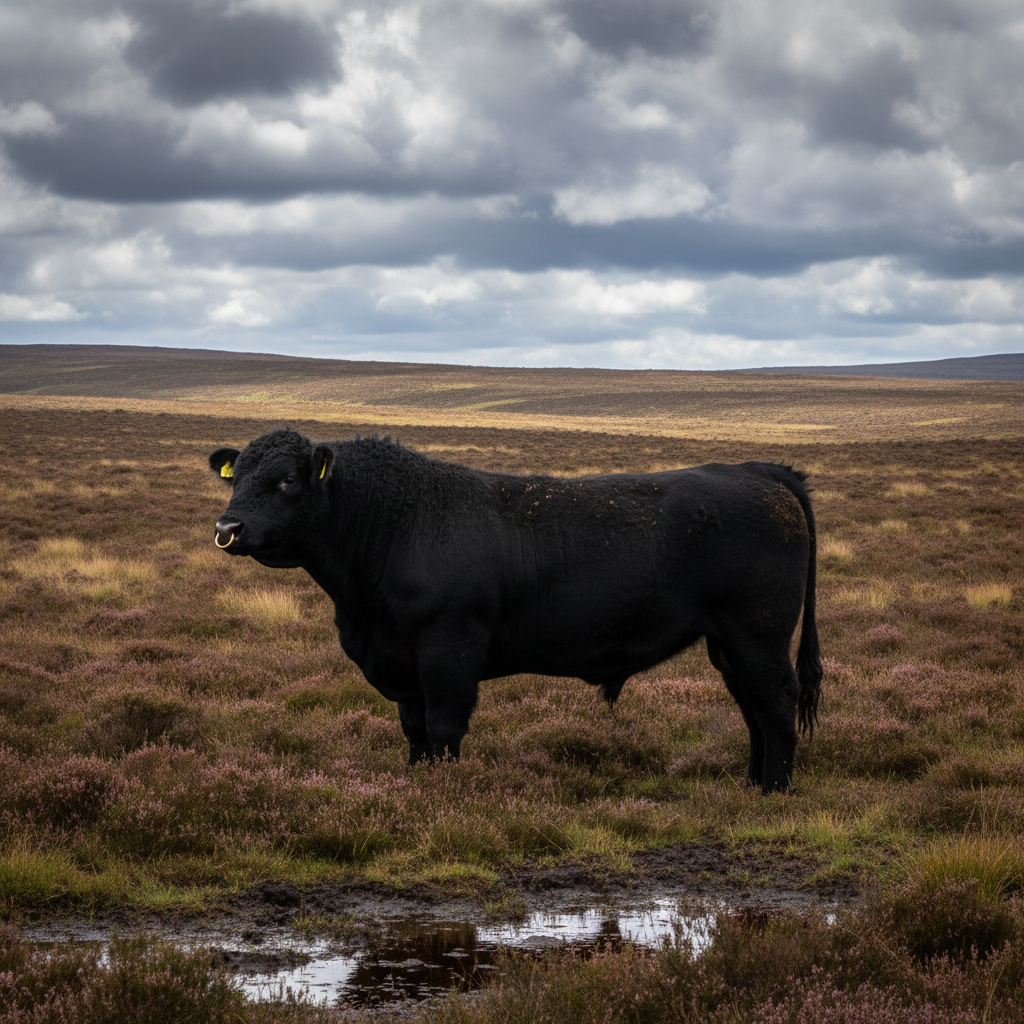
Born of Scotland's harshest highlands, the Black Galloway is nature's masterwork — a breed of extraordinary resilience, exceptional meat quality, and unmatched efficiency.
Forged by
Scotland's
Wildest Terrain
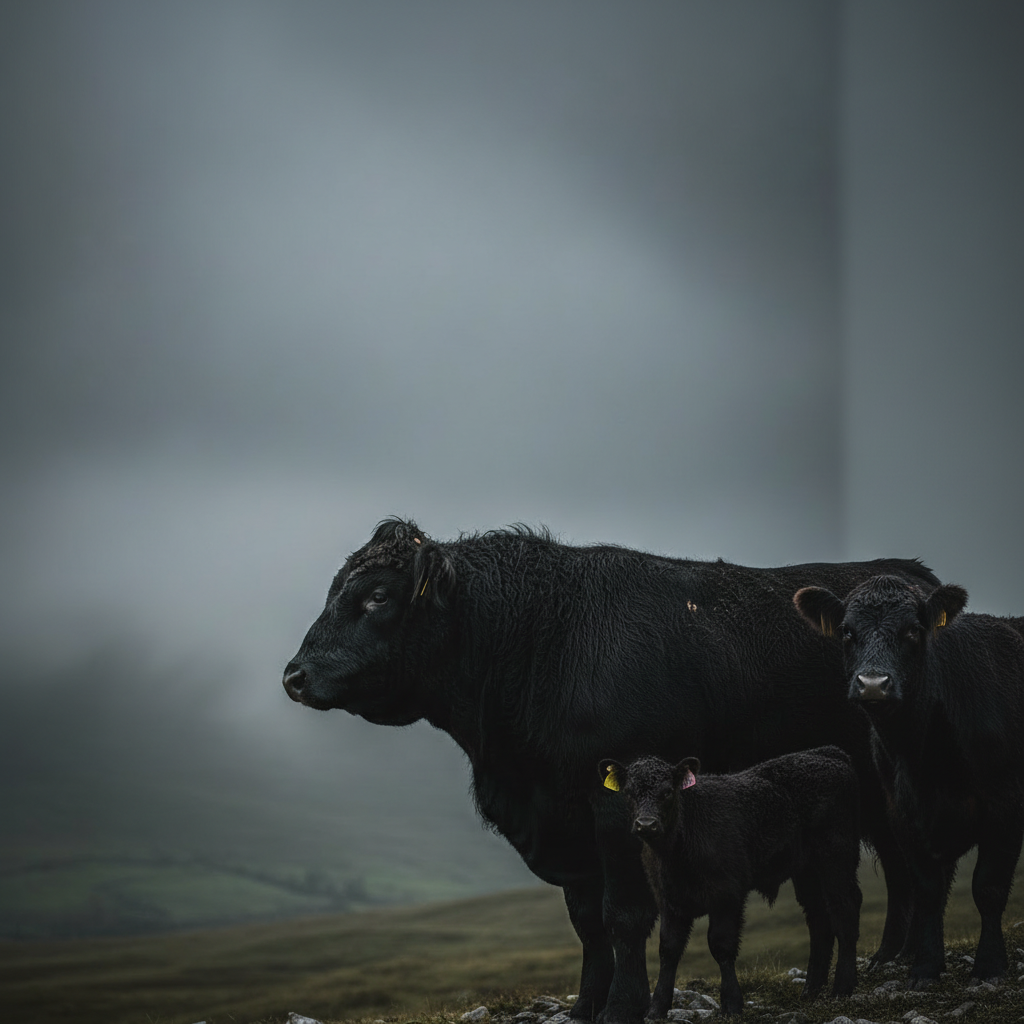
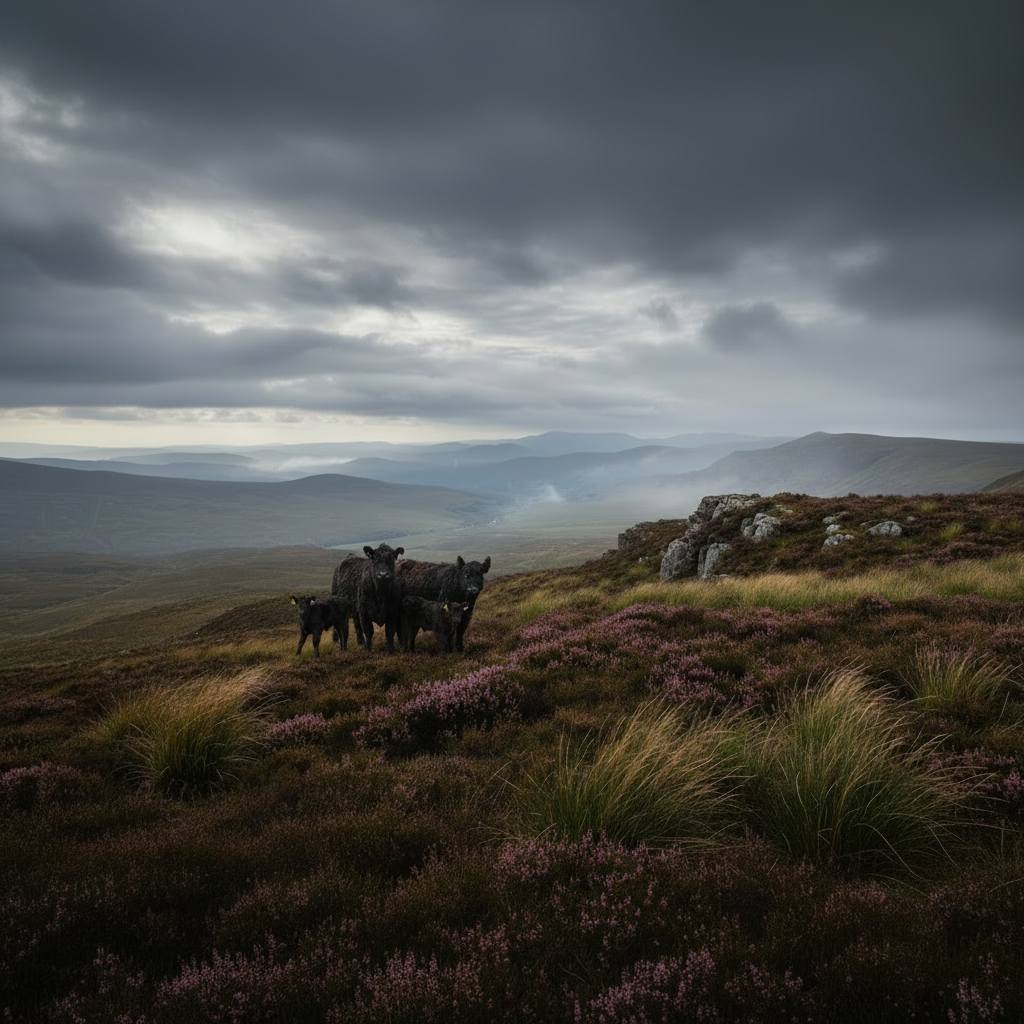
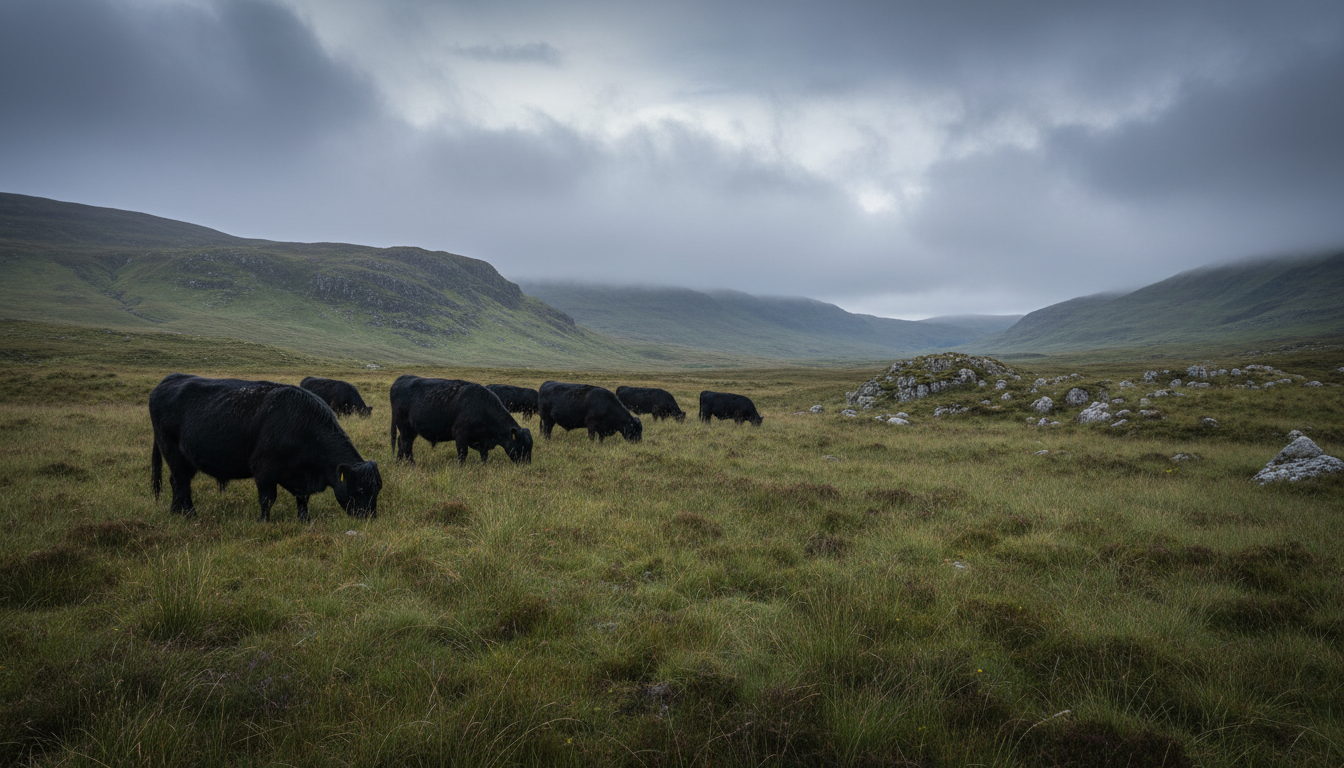
The Black Galloway traces its lineage to the rugged Galloway region of southwestern Scotland, where for centuries these remarkable cattle endured fierce Atlantic storms, sparse upland grazing, and brutal winters without shelter.
This ancient breed — one of the oldest and purest in the British Isles — developed its legendary double coat, exceptional foraging ability, and extraordinary hardiness not through human intervention, but through the relentless pressure of natural selection in one of Europe's most demanding environments.
Today, the Black Galloway remains a living testament to the power of heritage genetics — a breed that converts rough grazing into premium beef with remarkable efficiency, all while maintaining the gentle temperament and maternal instincts that have made it a favourite of stockmen for generations.
Nature's Most
Sophisticated Armour
Every advantage of the Black Galloway stems from centuries of natural selection in Scotland's harshest environments — a living proof that the best engineering is nature's own.
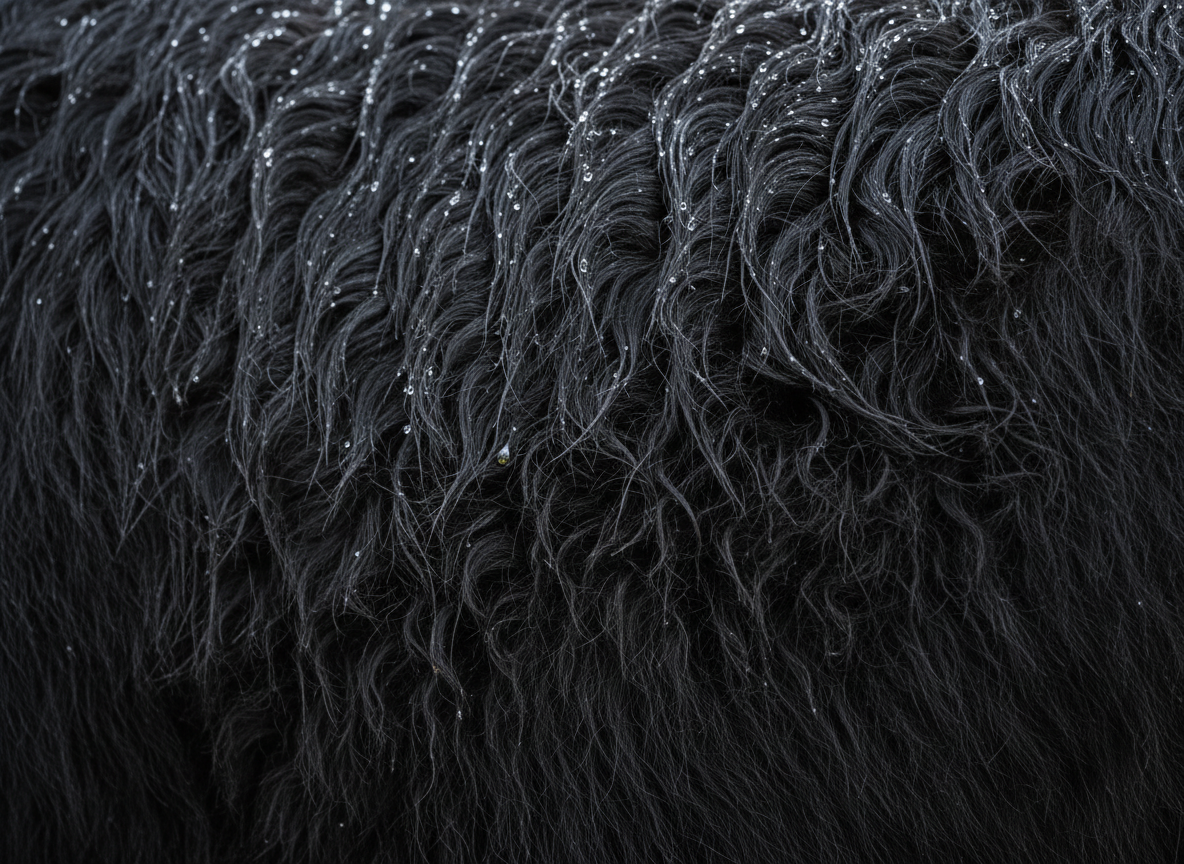
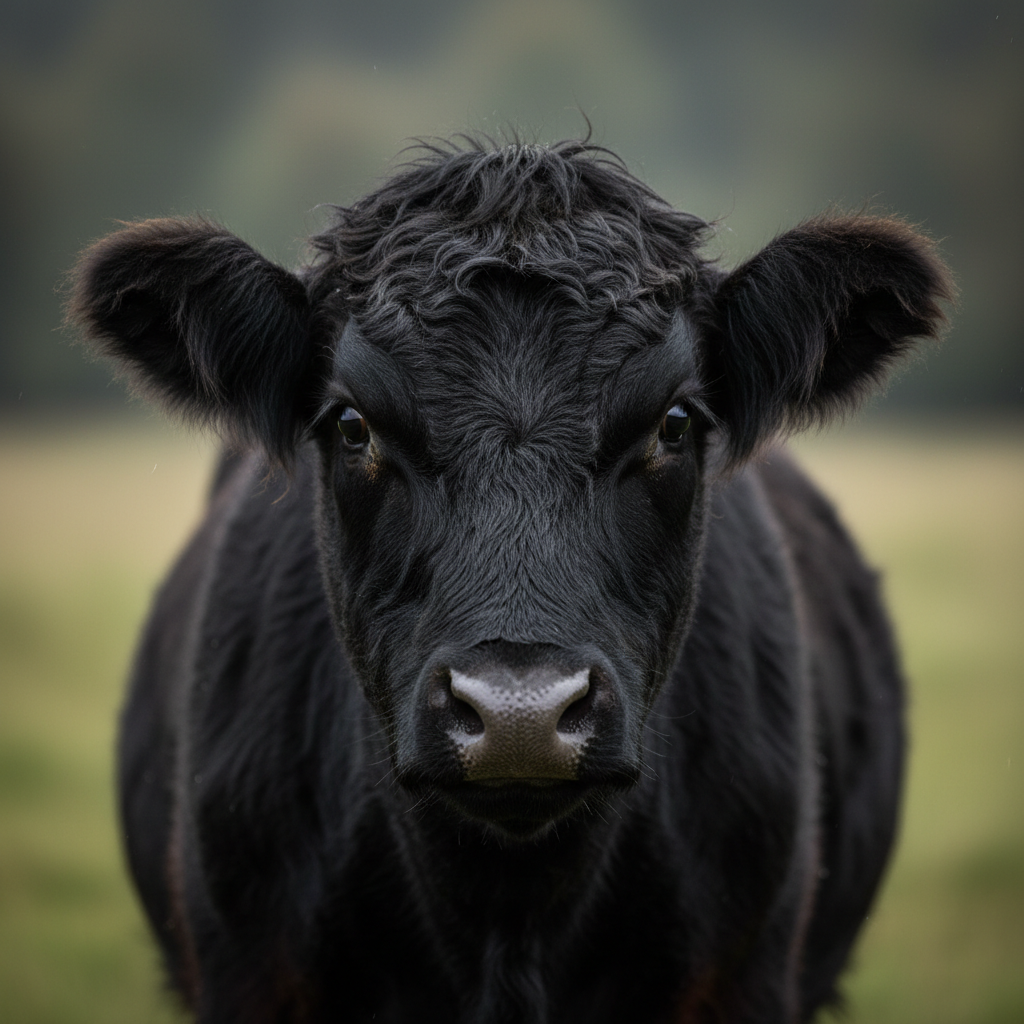
The "Secret" to Their Age: Their extraordinary lifespan is heavily tied to their unique double-layered coat — a wave of long guard hairs over a mossy undercoat. This offers such flawless insulation against freezing rain and snow that they don't need to develop a thick layer of outer body fat to stay warm. This places less metabolic stress on their organs over winter, keeping them structurally sound and metabolically youthful for years longer than short-haired breeds.
Thermal Regulation
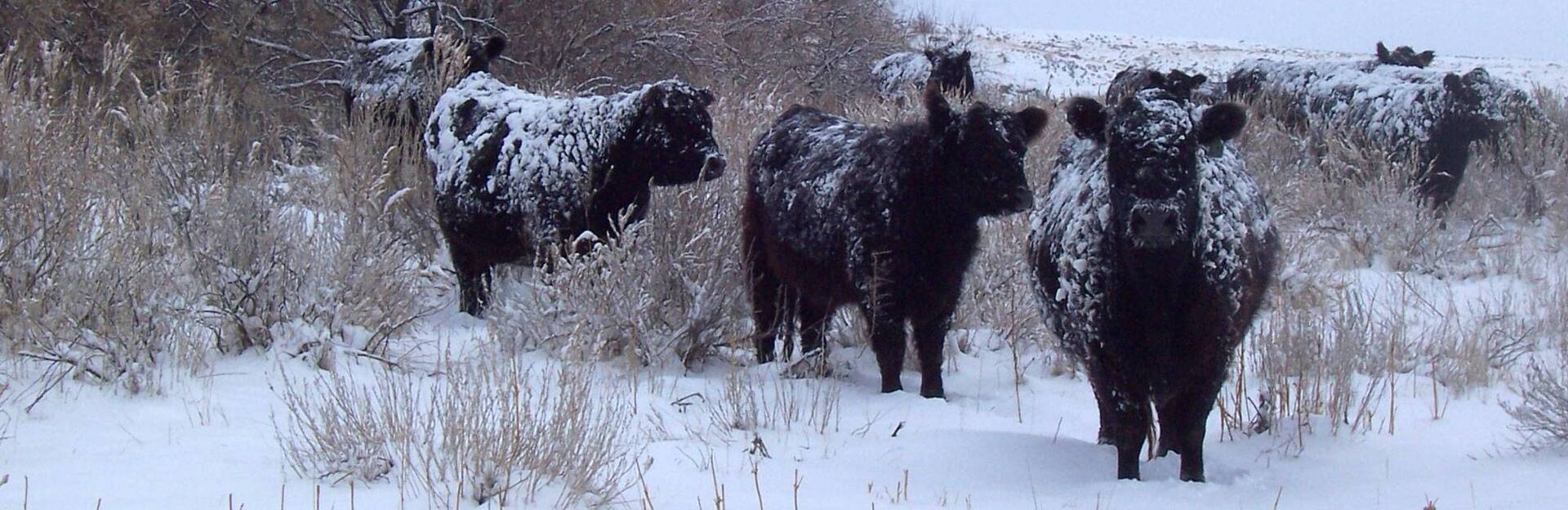
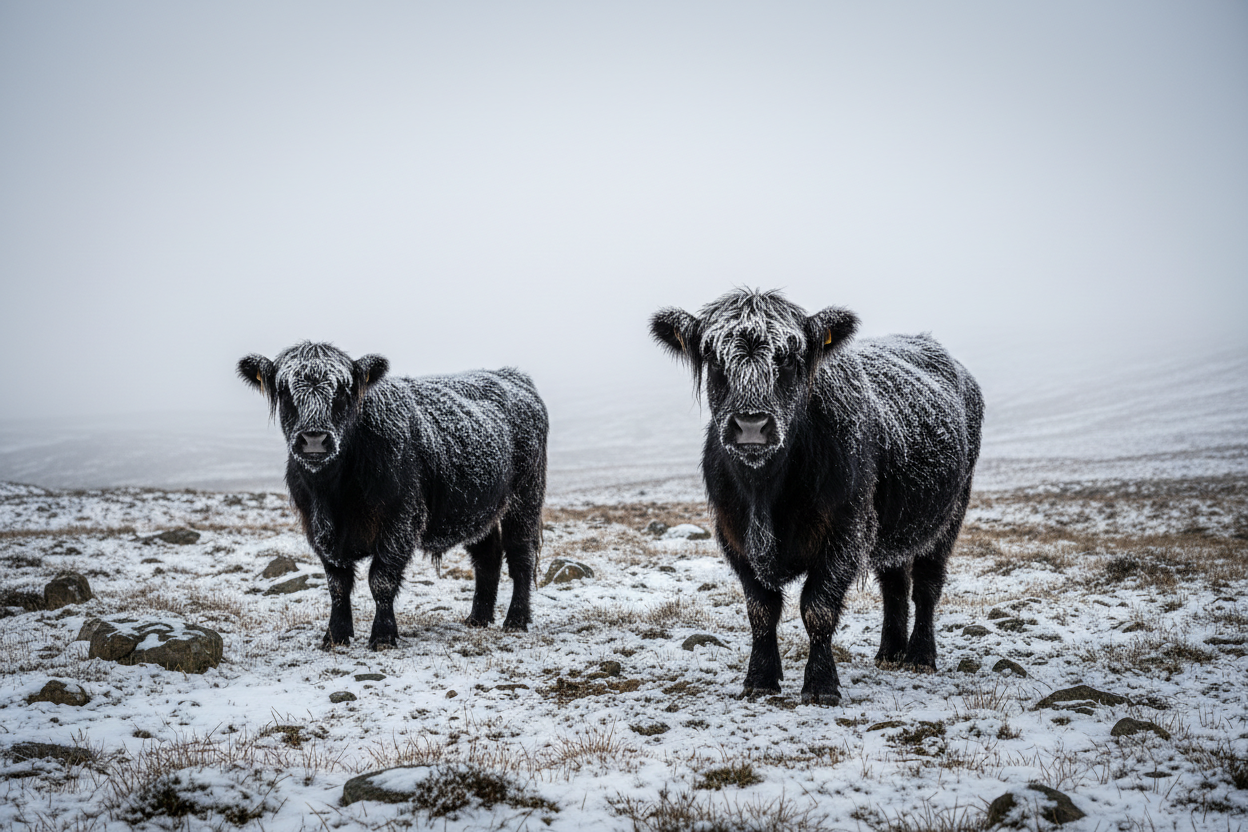
The unique double coat — a thick woolly undercoat insulated by a longer, wavy outer layer — provides unmatched thermal regulation. Galloways thrive in temperatures from -30°C to 35°C without supplementary shelter.
Water Resistance
Natural oils in the outer coat repel rain and snow, keeping the insulating undercoat dry. This reduces energy expenditure on thermoregulation by up to 20% compared to single-coated breeds.
Calving Ease
Black Galloways are renowned for unassisted calving, with rates consistently above 99%. Calves are vigorous at birth, standing and suckling within minutes — even in harsh weather conditions.
Low-Input Efficiency
Exceptional foragers that thrive on rough grazing, heather, and browse that other breeds reject. They convert marginal land into premium beef with minimal supplementary feed, reducing farm input costs by 30–40%.
Disease Resistance
Centuries of natural selection have produced exceptional immune resilience. Galloways exhibit lower veterinary costs, reduced parasite burden, and remarkable resistance to respiratory and foot ailments.
Premium Beef Quality
Galloway beef is naturally marbled with finely distributed intramuscular fat, yielding a rich, distinctive flavour. Studies show Galloway beef contains higher levels of Omega-3 fatty acids and CLA than conventional breeds.
Exceptional Fertility
Galloways are widely recognised as an exceptionally fertile and hardy breed, renowned for getting in calf quickly and consistently reproducing into their late teens. Herd reports of 100% conception rates are not uncommon — a testament to the breed's extraordinary reproductive vigour and longevity.
Natural Fly Resistance
The Galloway's thick, woolly undercoat and stiff, curly outer coat provide a natural defence against flies. Research shows that breeds with more hairs per square inch have higher concentrations of skin glands that secrete chemicals repellent to flies — a built-in biological shield unique to heavily coated breeds.
Robust Feet & Legs
Evolved across the rugged, damp moorlands and hills of southern Scotland, Galloways developed naturally durable hooves and strong legs over centuries. The breed is widely recognised for being far less prone to lameness and foot problems than many other breeds, significantly reducing veterinary intervention and hoof-trimming costs.
Great Foragers
When it comes to earning a living off the land, the Galloway reigns supreme. The famous cattle breeder William M'Combie noted that Galloways would fatten on pasture on which his Aberdeen Angus cows would 'waste away'. Galloways graze and browse a far broader variety of grasses, forbs, weeds, and brush than any other breed. When neighbouring cows bawl for a handout, Galloways are still rustling up a meal from what the Forage Guide calls worthless pasture. Pastured with other breeds in winter, they are known for being the last to arrive for hay feeding and the first to depart — consuming less of your expensive stored feeds. That's real money you can take to the bank.
The Back Fat Advantage
It takes 3–4 times more calories to deposit back fat than lean meat — making back fat an extraordinarily costly metabolic luxury. The Galloway's legendary double coat replaces the need for subcutaneous insulation, resulting in an average back fat of just 2% compared to 10% in the Aberdeen Angus. That means Angus cattle expend 400% more calories building a fat layer that the Galloway simply doesn't need — calories a Galloway converts into lean, premium beef instead. The Galloway coat is not just a welfare advantage; it is a profound feed efficiency advantage.
Bull Fertility
Galloway bulls are exceptionally fertile at an early age — a fact dramatically illustrated by a report from Tasmania. A beef producer turned out a 3-year-old Hereford bull and an 18-month-old Galloway bull with 26 heifers. The Hereford was considerably larger, and the producer doubted the young Galloway would have any opportunity to breed. Nine months later, his opinion changed completely — the first 24 calves born were by the Galloway bull. If you want your cows in calf, the Galloway is the bull for the job.
Breed
Characteristics
Comprehensive data on the Black Galloway — from physical characteristics and reproductive performance to meat quality and management efficiency. Every metric confirms why this breed is the premier choice for sustainable, low-input beef production.
Physical Characteristics
Reproductive Performance
Meat Quality
Management & Efficiency
In Their
Natural Element
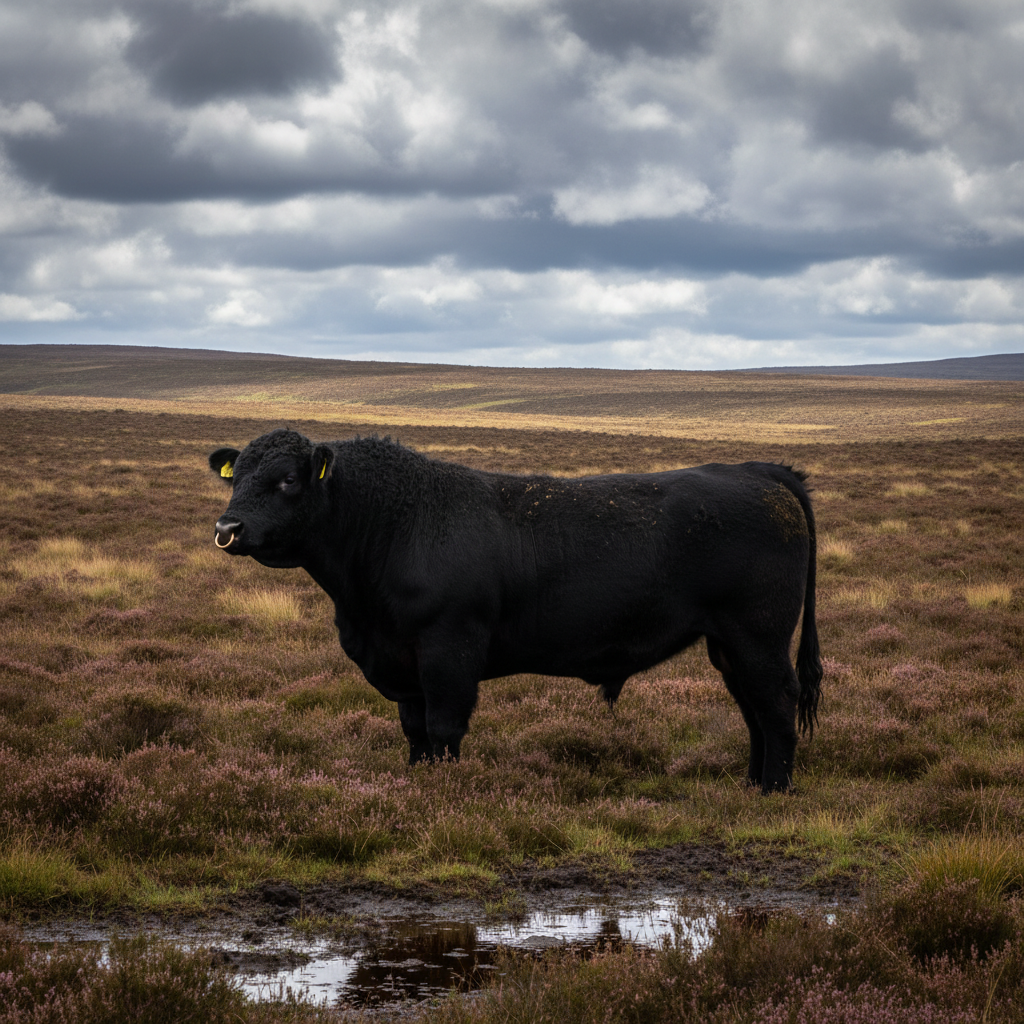
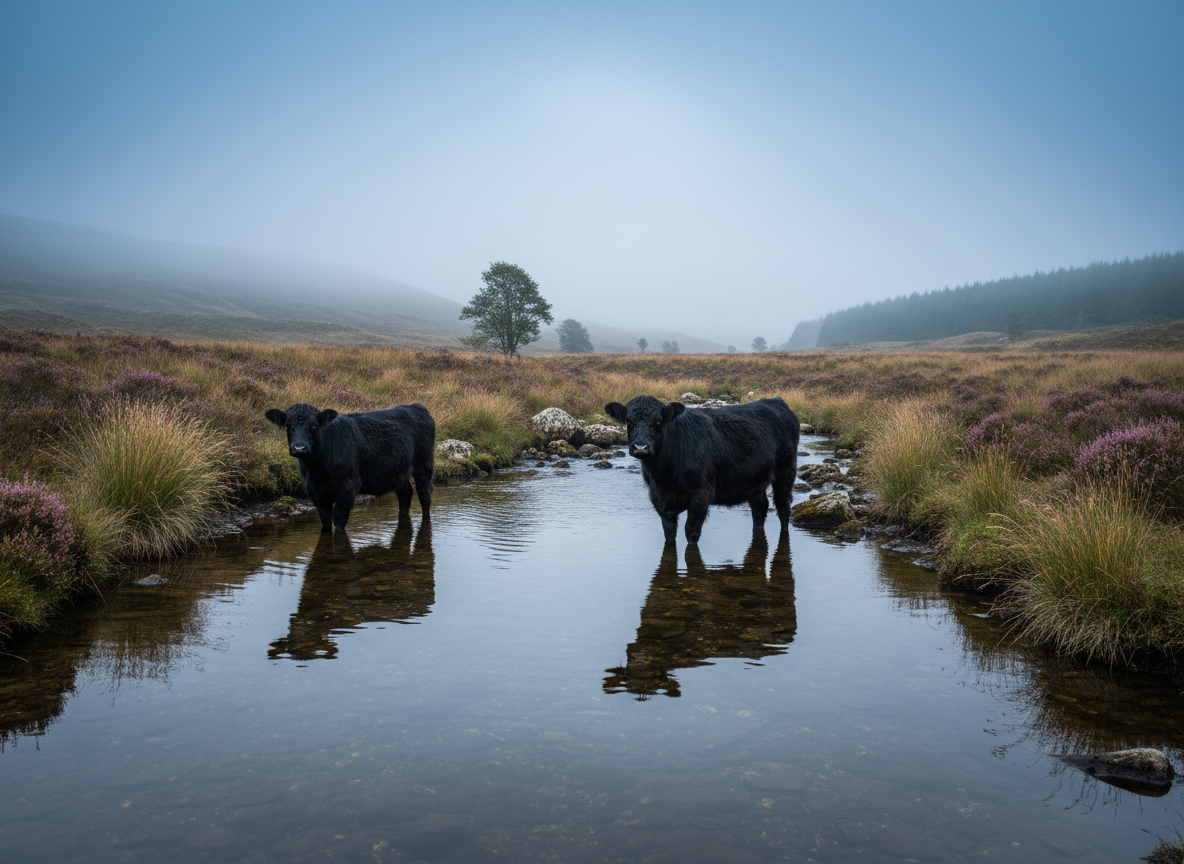
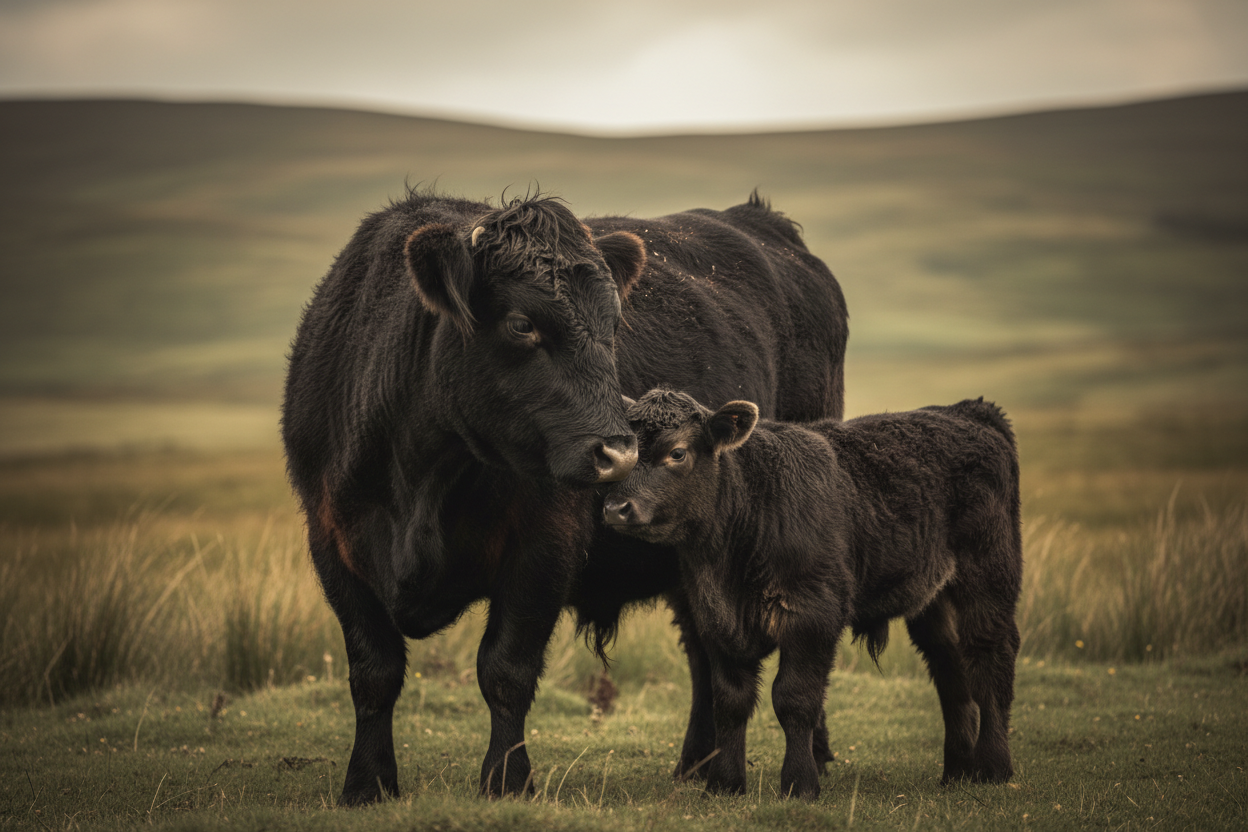
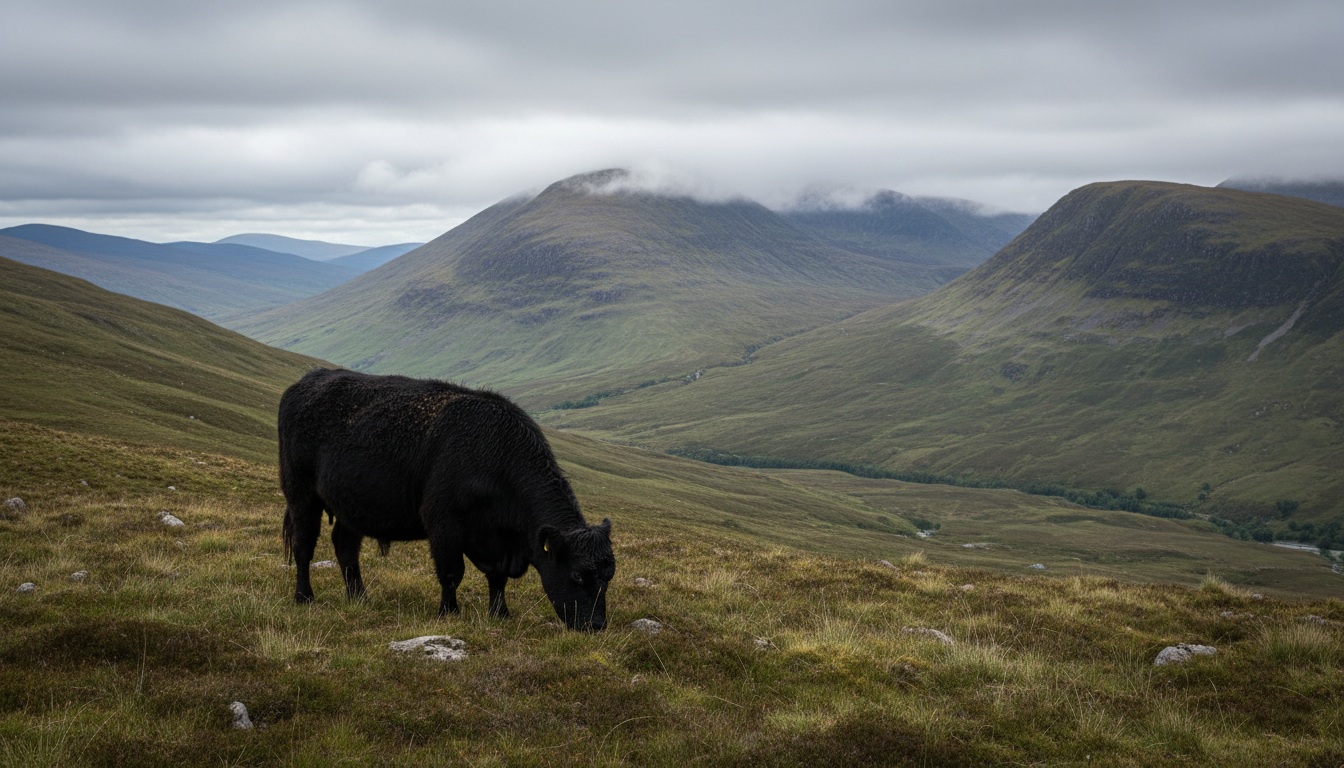
Best Breed Combinations
for Scotland
Using a Galloway bull in your herd brings excellent hybrid vigor — conferring hardy genetics, exceptional forage efficiency, and unassisted calving. Their offspring mature into high-quality, heavily marbled beef while retaining the docile temperaments and maternal traits that make herd management easier.
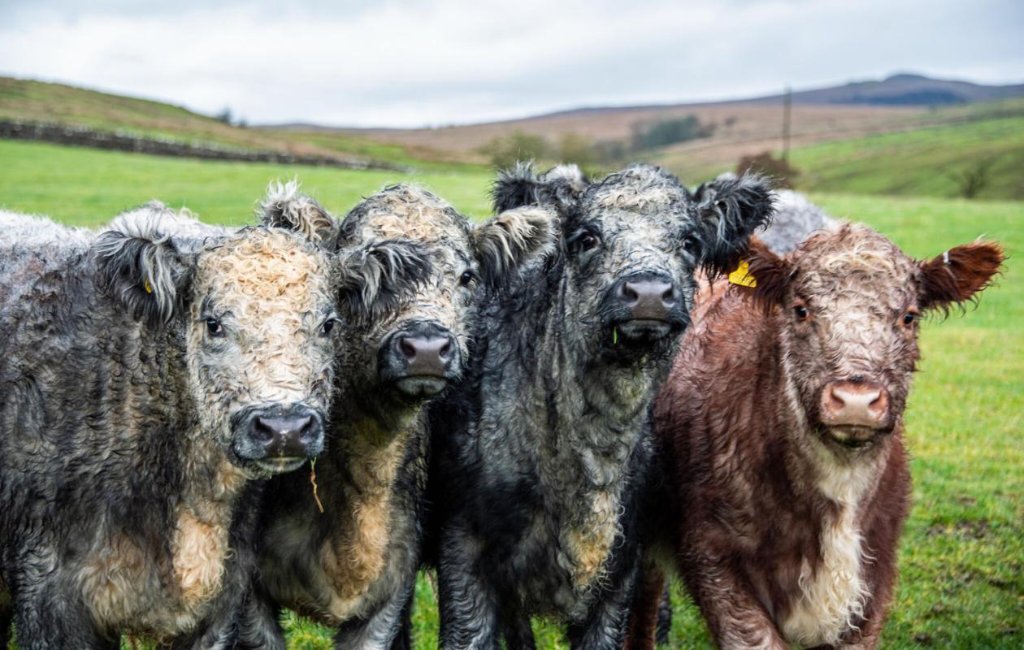
Blue-Grey cattle — the classic Galloway × Whitebred Shorthorn cross, at home on the Scottish hills.
The Blue-Grey
Galloway × Whitebred Shorthorn
An increasingly popular cross of the hardy Galloway cow with the Whitebred Shorthorn bull. Bluegreys date back to the mid-19th century, and the cross gained popularity throughout the 20th century thanks to the Bluegrey female's exceptional maternal abilities and the male's reputation for producing high-quality beef. This resilient hill cow is experiencing a resurgence due to its low maintenance requirements, ability to thrive in extreme weather conditions, and on poor grasslands. Bluegrey cattle can be crossed with any sire to produce an excellent, easily fleshed beef calf.
Galloway × Aberdeen Angus
Two iconic native Scottish breeds
Crossing a Galloway bull with an Aberdeen Angus herd combines two of Scotland's most iconic native breeds, resulting in excellent hybrid vigor. This pairing yields hardy, easy-calving offspring well-adapted to the Scottish climate, capable of thriving on low-cost forage while qualifying for premium beef markets and environmental incentives.
Learn more at Scottish Black CattleSuperior Hybrid Vigor
Both are genetically consistent, native Scottish breeds. Crossing them creates vigorous F1 offspring that often exhibit faster growth, greater disease resistance, and robust calf survivability.
Excellent Calving Ease
Galloway bulls are widely renowned for siring calves with a low birth weight and a high will to live, which ensures smooth, unassisted calving even on heifers.
Climate Hardiness & Efficiency
Galloways evolved in the rugged hills of southwestern Scotland. Their offspring retain condition even in harsh, damp, and cold conditions — highly efficient forage converters that require less housing or supplementary grain over winter.
Premium Beef Markets
Both Aberdeen Angus and Galloway genetics are celebrated for producing premium, highly marbled beef. If the resulting calves are black, they may also qualify for lucrative breed promotions.
Calving Ease
Galloway genetics are renowned for easy, unassisted births. When used on heifers, their calves are born small and vigorous, quickly getting up to suckle.
Superior Forage Efficiency
Galloways are highly adaptable foragers that efficiently convert poor-quality pasture and roughage into high-value meat. They are unselective eaters, helping to manage weeds and improve overall pasture swards.
Exceptional Meat Quality
Calves sired by a Galloway produce naturally marbled, lean beef on low-cost, grass-based finishing diets — yielding well-marbled, highly flavorful carcasses.
Weather Hardiness
The breed's unique double coat (a thick, wooly undercoat and bristly guard hairs) naturally repels harsh Scottish weather. This hardiness transfers to their offspring, allowing them to thrive outdoors year-round.
Docile Temperament
Galloways are known for being very calm and friendly, making day-to-day handling and herd management safer and far less stressful.
The Knowledge
Repository
Curated links to breed societies, registries, research institutions, and educational resources — everything you need to learn more about the Black Galloway and connect with the global breeding community.
Breed Societies & Registries
The original UK breed society, founded in 1877. Maintains the official herd book, breed standards, and pedigree registration for all Galloway varieties.
The official registry for Galloway cattle in the United States. Offers registration services, breeder directory, and annual sales.
Australia's Galloway breed society. Registration, shows, and connecting breeders across Australia and New Zealand.
Canada's breed registry and breeder network. Promotes the Galloway for harsh Canadian climatic conditions.
A comprehensive grassroots directory of Galloway breeders and herds, providing an invaluable community resource for connecting with producers and sourcing registered stock across the UK.
Research & Efficiency Studies
Landmark Canadian research from Old College, Alberta, examining the feed efficiency and cold-weather performance of Galloway cattle relative to other beef breeds.
Australian research investigating the productivity, hardiness, and adaptability of Galloway cattle across diverse Australian climatic and pastoral conditions.
An in-depth study of the unique grazing and browsing behaviour of Galloway cattle, documenting their ability to utilise a far broader range of forage than conventional beef breeds.
Background and research on the Blue Grey — the classic Galloway × Whitebred Shorthorn cross — covering its maternal qualities, hill-country resilience, and resurgence as a low-maintenance, high-quality beef animal.
A collection of research and breeder observations on Galloway cattle, drawing together practical experience and documented findings on the breed's performance, hardiness, and behaviour.
Breeder Experiences & Community
First-hand producer accounts documenting the practical advantages of running Galloway cattle — from reduced input costs and veterinary bills to ease of management and longevity.
The official US registry and community hub for Galloway breeders. Breeder directory, sale listings, research articles, and promotional resources for the breed.
A great collection of the best cattle and a transparent story — we breed and select with AI for the best outcomes.
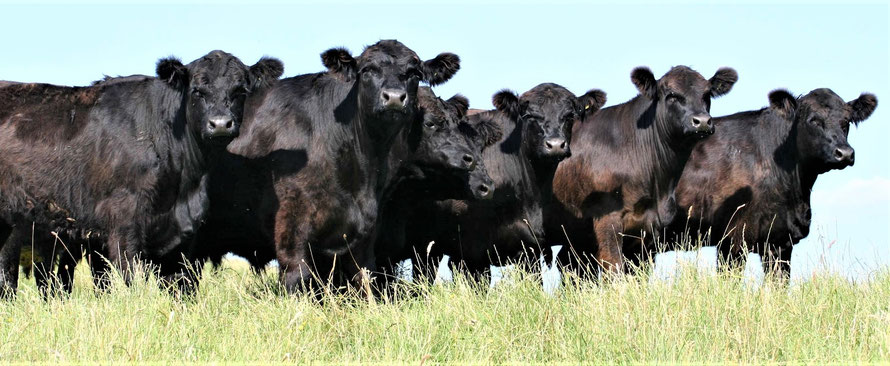
Black Galloway Bull
× Aberdeen Angus
Put a Black Galloway bull on an Aberdeen Angus cow and you get the Scottish Black — a genuinely Scottish native cross that combines the Galloway's legendary hardiness, double coat, and feed efficiency with the Angus's marbling and maturity. The result is a black, polled, low-maintenance animal that thrives on rough grazing while producing premium beef.
The Galloway bull passes on easy calving, vigorous calves, and the coat that means less back fat and more lean beef — while the Angus mother contributes milk and proven beef genetics. It is a cross built for the realities of Scottish and upland farming.
Learn more at Scottish Black CattleWhy Smaller is Better
For over 40 years, Pharo Cattle Company® has been the lone voice in the wilderness warning about the negative effects of increasing cow size. Now, academia is catching up. A recent article by Kim Ricardo from South Dakota State University confirms what low-input breeders have long known: mature cow size is a critical factor in evaluating profitability within a commercial cow-calf enterprise.
Weaning weight gained per 100-lb increase in cow size
Efficiency of a 1,500-lb cow weaning a 550-lb calf
Efficiency of a 1,000-lb cow weaning a 500-lb calf
1,000-lb cows a land base can support vs 1,500-lb cows
The Data on Cow Size
- •For every 100-pound increase in cow size, weaning weight only increases by about 10 pounds.
- •Smaller cows will always wean a higher percent of their own body weight than larger cows.
- •A 1,500-pound cow weaning a 550-pound calf achieves only 36% efficiency.
- •A 1,000-pound cow weaning a 500-pound calf achieves 50% efficiency.
- •A land base that can support 100 1,500-pound cows can support 135 1,000-pound cows.
- •The 1,000-pound cowherd will generate $55,000 more than the 1,500-pound cowherd.
The Black Galloway Advantage
The Black Galloway is precisely the kind of moderate-framed, low-input animal this research validates. Mature cows typically weigh between 1,000 and 1,200 pounds — the sweet spot for efficiency. They wean a high percentage of their own body weight, thrive on rough forage without expensive supplements, and require minimal winter housing. When calf prices fall — and they will — cow size will quickly separate the winners from the losers.
“While larger cows produce slightly heavier calves, the gains are minimal compared to the increase in input costs and the reduction in herd size they require.”
— Kim Ricardo, South Dakota State University

